
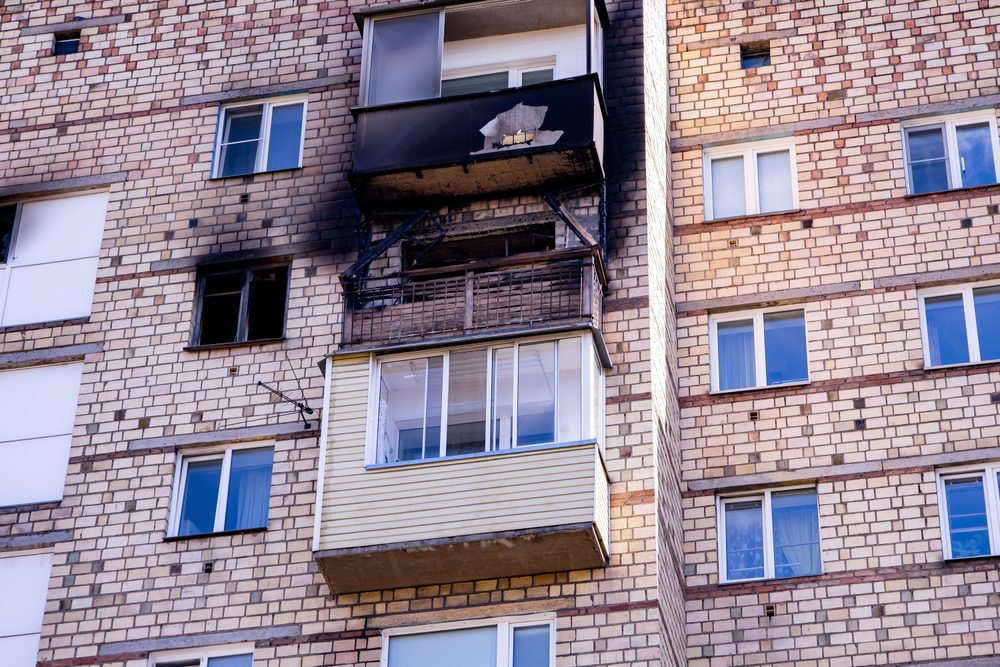
Commercial buildings can suffer sudden losses from fire, wind, water intrusion, and hidden moisture that later feeds mold growth. When operations slow or stop, a related business interruption claim may help address lost income and ongoing expenses, but coverage turns on careful policy reading and strong documentation. This overview explains how commercial property damage and business interruption claims work and what property damage attorneys can do to improve the quality of a submission.
Commercial Property Damage and Business Interruption Claims
Commercial property damage claims generally focus on repair or replacement of covered building components, equipment, and sometimes inventory. Common covered events include fire and smoke, wind damage, burst pipes, roof failure, and storm-driven water intrusion. In older or poorly ventilated structures, water intrusion can also create conditions for microbial growth, making “mold damage insurance claim Rhode Island” issues especially time-sensitive because insurers often scrutinize the cause of moisture and the speed of mitigation.
Business interruption coverages
Often labeled “business income” coverage, it is designed to address income loss and certain continuing expenses when covered property damage causes a necessary suspension of operations. The precise trigger is usually tied to direct physical loss or physical damage, and disputes frequently turn on whether the claimed condition truly altered property or whether an exclusion removes the risk from coverage. For example, the decision on Josephson v. Affiliated FM Insurance Company addressed pandemic-era business interruption allegations and affirmed denial of coverage where a contamination exclusion applied.
Because many policies also include time limits, waiting periods, and requirements about how loss is measured, a business interruption submission typically relies on financial records, proof of operational interruption, and a defensible calculation methodology. Verveine Corp. v. Strathmore Insurance Co. analyzed “direct physical loss or damage” language in business interruption disputes, often rejecting claims where the asserted condition did not involve a tangible alteration of property.
How to Ensure That You Get the Best Compensation Possible
A strong submission is built early, with consistent records and a clear theory of what happened, what it damaged, and what it cost.
Report the loss promptly and preserve the scene responsibly
Document conditions immediately with photos, videos, and written notes, and keep samples or damaged materials when appropriate. Prompt reporting also helps address insurer questions about whether conditions, including moisture and mold, worsened due to the delay.
Create a clean timeline that ties damage to a covered cause
Insurers often test whether damage stems from a covered event or from long-term seepage, wear, or maintenance issues. A chronological record, supported by invoices and inspection notes, reduces avoidable disputes about causation.
Separate emergency mitigation from permanent repairs
Keep receipts and scopes for water extraction, drying, temporary roof protection, or equipment rentals distinct from reconstruction and build-back work. This makes it easier to evaluate reasonableness and necessity.
Treat potential mold conditions as an urgent mitigation issue
Where water intrusion is involved, record humidity readings, drying logs, and remediation steps, and preserve reports from qualified indoor environmental professionals. Many policies apply strict wording to mold, fungi, or contamination issues, so clear proof of the moisture source and remediation steps is essential.
Prepare a business interruption package that is audit-ready
Provide profit and loss statements, payroll records, tax filings, sales reports, and proof of resumed operations. When claiming “extra expense,” show how the expense reduced the suspension period or protected revenue, and support the amounts with vendor documents.
Can a Property Damage Lawyer Bolster Your Claim?
Property damage lawyers can improve a claim by organizing evidence around policy requirements, clarifying disputed causes of loss, and pressing for fair handling when the file stalls. Counsel can also help evaluate whether exclusions are being applied correctly and whether the insurer is treating the loss as a covered peril with resulting damage or attempting to reframe it as an uncovered condition.
For businesses facing water intrusion, suspected microbial growth, or disputed scopes of repair, a property lawyer in RI can also help coordinate the claim record so that estimates, remediation reports, and financial proof align. This is often valuable where an insurer requests repeated documentation or challenges whether the interruption period and income loss were supported by reliable data. Businesses also benefit when counsel ensures that communications remain consistent and that deadlines, proof-of-loss steps, and valuation requirements are met without gaps. If you are evaluating lawyers for property damage, look for a practice that can explain coverage positions in plain terms and build a record that holds up if the dispute proceeds to court.
Know What Businesses Should Know About Commercial Property Damage
Commercial property damage and business interruption claims succeed when the submission shows a covered cause, documented repairs, and a defensible income-loss calculation. Courts in Rhode Island, Massachusetts, and Connecticut have repeatedly focused on policy triggers and exclusions, so clear evidence and careful policy-based framing remain essential.If you need guidance on a disputed scope, a drying and remediation record, or a business income calculation, schedule a consultation with Palumbo Law or call (401) 490-0994.